4.9 Trusted by 1000+ Newcomers to Montenegro
Welcome Guide to Montenegro for Expats & Entrepreneurs
Discover everything you need to live, work, and start a business in Montenegro — in plain English. Download our free 20,000-word guide today.
- Cost of Living and Where to Live
- Residency Options and Step-by-Step Visa Help
- Company Formation and Tax Basics
- Banking, Healthcare, and Insurance
- Local Insights and Expat tips



Embracing Life in Montenegro as an Expat, Retiree, or Entrepreneur
Zdravo! Moving to a new country is fun and exciting but also takes some planning and (argh) hard work. Whether you have already made the decision to start your new life in Montenegro or are still considering it, this in-depth guide will help you get all the essentials sorted with ease, and adapt to the local (business) culture and customs as swiftly as possible.
Learn which steps you should already take before coming to Montenegro, and what should be on your to-do list after arriving. Browse through numerous tips & tricks, practical information, and valuable checklists that will help you function effectively in Montenegro from day one.
This guide is meant to serve as your go-to guidebook and directory, a source of information you’ll always come back to, even years into your relocation journey. It is written by the immigration experts behind adriacom. We’ve assistend thousands of expats, retirees, and entrepreneurs starting businesses, becoming residents, buying property, and succeeding in Montenegro.
Why Relocate to Montenegro?
While each newcomer to Montenegro has a different background, some decide to move here because of its affordability, low tax rates, and remote work opportunties. Others fall in love with Montenegro thanks to its stunning landscapes and seemingly endless supply of pristine beaches, towering mountains, glacial lakes, and waterfalls.
Even more so than their Italian neighbors, Montenegrins are very aware of the potential turmoil that can be experienced when you lose sight of the bigger picture and get consumed by the little stressors of everyday life. To counter what they consider an intolerable state of mind, they even have their own mantras – lagano (“no worries”) or samo polako, which translates to “take it easy”.
Did you know that Montenegro is renowned for its coffee culture, one that rivals even Italy’s? And that it is just an hour’s flight away from many amazing European cities like Milan, Rome, Vienna, Budapest, and Munich? No wonder, Montenegro is slowly becoming one of the most popular bases just outside the Schengen Zone.
And for those wanting to spend more than just a couple of weeks at a time in this eautiful Espresso-sipping country, Montenegro’s straightforward immigration process makes it possible to obtain a residence permit in just 3 weeks. What’s more, its property visa program lets you purchase real estate with no required minimum investment.
Montenegro at a Glance
Geography and Climate
Montenegro is one of Europe’s smallest countriest, made up of a mountainous stretch of land along the Mediterranean, bordering Croatia, Bosnia & Herzegovina, Serbia, Albania, and Kosovo. It has a total land area of 13,810 km² (5332 square miles) – similar in size to Cyprus or the U.S. state of Connecticut.
Given its tiny size, Montenegro boasts a surprising range of diverse landscapes, including the stunning mountain massifs of Durmitor and Prokletije, the Zeta Plain around the country’s capital city Podgorica, and the dramatic cliffs and coves of the Adriatic. The Bay of Kotor is a UNESCO World Heritage Site.
It is also home to the world-renowned Tara River Canyon (one of the deepest in Europe), picturesque glacial lakes (e.g. Black Lake in the Durmitor National Park), the subtropical wetlands surrounding Lake Skadar, and one of Europe’s last remaining primeval forests – Biogradska Gora.
Similar to its rich environment, the climate in Montenegro is also varied, with mild Mediterranean weather in Podgorica and the coastal towns, and alpine climate in the country’s interior. What Montenegro’s most populated regions all have in common, however, is that they experience all four distinct seasons: spring, summer, fall (autumn), and winter.
- Summers in Montenegro last from around June to September and the weather varies from warm to hot, with daytime temperatures between 25 and 40 degrees Celsius (77 and 104 degrees Fahrenheit), especially in the coastal and lowland regions, while the mountains remain cooler.
- Autumn and spring are transitional seasons when temperatures gradually shift – either cooling down or warming up – and a significant portion of the yearly rainfall takes place, with both warm, sunny days and periods of heavy rainfall. This is especially noticeable in coastal and central regions like Podgorica, Cetinje, and along the Bay of Kotor.
- Winter in Montenegro varies by region. In the mountains and northern interior, it is often very cold, with temperatures frequently dropping below zero degrees Celsius (32°F), and snow covering the ground from December to March or even April. In contrast, the coastal areas experience mild, rainy, and humid winters, where temperatures usually stay above freezing.
Cities & Regions
Podgorica, the capital city of Montenegro, is located on no less than five rivers (Morača, Ribnica, Sitnica, Cijevna, and Zeta), on the border between lowland agricultural areas and mountainous terrain. Podgorica’s microclimate and fertile soil is ideal for wine growing, as evidenced by dozens of small winemakers, plus Europe’s largest single-site vineyard, Plantaže, located just outside its city limits.
In total, Montenegro has 25 municipalities grouped into three regions: Coastal, Central, and Northern. The three largest cities, Podgorica, Nikšić, and Budva, are home to just over 200,000 people, accounting for nearly one-third of Montenegro’s total population.
| Region | City/Town | Population |
|---|---|---|
| Coastal | Kotor | 12,659 |
| Tivat | 10,743 | |
| Herceg Novi | 16,075 | |
| Budva | 19,497 | |
| Bar | 14,823 | |
| Ulcinj | 11,143 | |
| Central | Podgorica | 172,139 |
| Nikšić | 32,046 | |
| Cetinje | 12,504 | |
| Danilovgrad | 1,632 | |
| Northern | Pljevlja | 16,111 |
| Bijelo Polje | 12,900 | |
| Rožaje | 11,215 | |
| Berane | 9,532 |
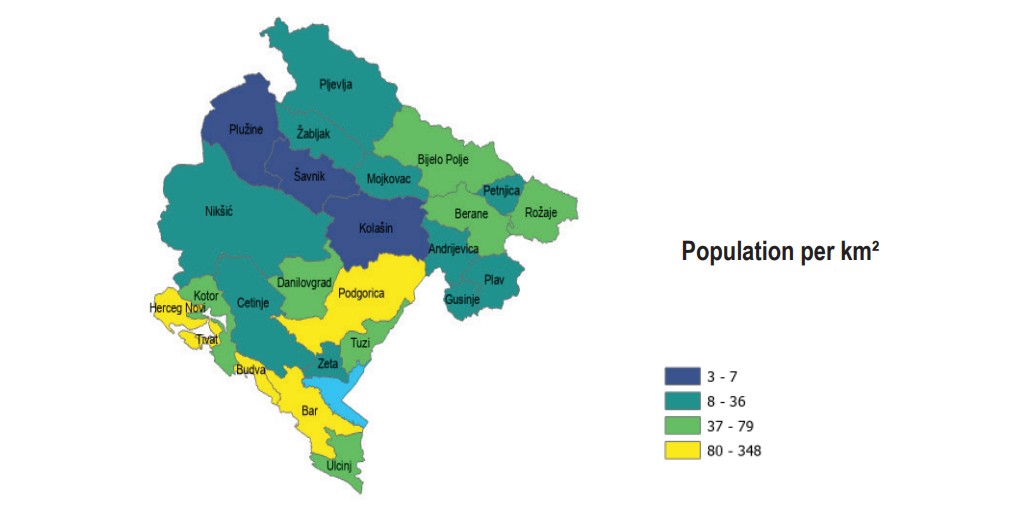
Most Montenegrins are spread out along the shores of the Adriatic and in and around the capital city Podgorica, north of Lake Skadar, while major parts of the country are only very lightly populated, including the northern mountainous areas.
The Montenegrin People
In 2025, Montenegro had a population of around 633,000 people, and as a nation, it is home to several ethnic groups: Montenegrins (41.12%), Serbs (32.93%), Bosniaks (9.45%), Albanians (4.97%), and Croats (0.83%), who all share close cultural ties, but not the same religion, and in the case of Albanians, not the same language.
Most Albanian-speaking Montenegro citizens maintain a unique identity, culture, and language (Shqip). They primarily live in the southeastern and eastern regions of Montenegro that border Albania, in towns like Tuzi and Ulcinj. The region that is now Montenegro was originally inhabited by Illyrians prior to the arrival of the Slavic peoples in the 6th-7th centuries CE.
Whereas Montenegrins and Serbs predominantly follow Eastern Orthodox Christianity, Bosniaks largely adhere to Islam. They are Slavic-speaking descendants of Muslim communities that developed during the Early Modern Period under Ottoman rule in the Balkans.
Prior to gaining international recognition as a sovereign state in 1878, Montenegro consisted of several tribes such as the Vasojevići, Bjelopavlići, Piperi, Kuči, and Rovčani, each with its own distinct traditions, identity, and local leadership, yet united by a shared South Slavic heritage and a strong sense of independence, shaped by centuries of resistance to occupation by larger empires.
Old Montenegro, the historical core of Montenegro around its former capital Cetinje, was a much smaller territory without access to the Adriatic and control over Podgorica and Niksic. Its territorial expansion only began in the late 19th century after victories against the Ottoman Empire.
Montenegro’s demographic picture is changing once again. In recent years, the country has experienced a sizeable influx of expats from around the world. In coastal towns like Budva, Tivat, Herceg Novi, and Bar, foreign residents can make up over 20–30% of the local population, and have become an increasingly important part of Montenegro’s multicultural society.
Economy
Montenegro’s free market economy is diverse, with key sectors including tourism, energy, and agriculture. The country is investing heavily in renewable energy, particularly solar, wind, and hydropower, with the goal of becoming entirely self-sufficient in energy production. More than 75 percent of working Montenegrins now have jobs in service industries, and a significant portion works in tourism, hospitality, and retail.
Montenegro’s once-prosperous manufacturing sector has been heavily dependent on mining, aluminium, and steel production. Many regions that cannot benefit from the tourism trade rely on the development of natural resources. However, only a minor share of Montenegro’s exports consists of minerals and agricultural products such as olives and wine. The European Union is Montenegro’s largest international trading partner.
Government
Montenegro is a parliamentary republic with two main levels: the national government and local municipal governments. And while the President, who is elected every five years, serves as the head of state and has mainly ceremonial duties, the Prime Minister sets the national agenda as the head of government. The Blue Palace in Cetinje is the official residence of the President of Montenegro.
Montenegro’s central government (Vlada Crne Gore) is located in Podgorica, and is responsible for providing public services for the benefit of the community as a whole, such as national defence, infrastructure investments, education, and representing the country on the international stage. It is led by the Prime Minister.
Montenegro’s 25 municipal governments are each led by a mayor (gradonačelnik for cities or predsjednik opštine for municipalities). Responsibilities such as waste management, water supply and sanitation, maintenance of local infrastructure, public transportation, and support for tourism development all fall within the scope of the municipalities.
Residency Options
Montenegro offers several pathways to temporary and later permanent residency, including the business-based entrepreneur visa, residency by real estate investment, and even yacht residency, an appealing option for boaters who wish to make the Adriatic their home.
Residency by Company Formation
Ideal for entrepreneurs, remote workers, consultants, and digital nomads, set up a Montenegrin (limited) company and hire yourself as the diretor to qualify for an easily renewable 1-year temporary residence permit in Montenegro. Unlike most other countries, you don’t need to employ local workers and the company does not need to generate any income. You already qualify for residency when the company pays you a small salary and covers the mandatory salary taxes.
Property Visa
Owning residential or commercial real estate in Montenegro also qualifies you and your dependents to apply for temporary residency based on property ownership. This is one of the easiest legal pathways to long-term living in Montenegro, and is particularly popular with retirees, as no minimum investment is required and small studio apartments also qualify.
Yacht Residency
A recently introduced residency program that caters to boat and yacht owners who are looking for a legal way to spend more than 90 days in Montenegro, for instance during the winter months. Prospects need to have secured a mooring contract with one of Montenegro’s official marinas and purchase travel health insurance to qualify.
Employment-Based Residency
If you are coming to work in Montenegro, you will need to be sponsored by a Montenegro-based employer before being able to apply for your temporary work and residency permit. It must be applied for after entering Montenegro at the local immigration office where you will be staying. If your passport does not grant you visa-free access to Montenegro, you first need to get a valid entry visa from your nearest Montenegrin embassy or consulate.
Family Reunification Residency
As a temporary or permanent resident of Montenegro, you may also include your married spouse and minor children (aged 17 and under) in your residency application via the family reunification pathway – if you can demonstrate sufficient income or financial means to support family members. However, you won’t be able to sponsor elderly parents, adult children, or other close relatives.
Permanent Residency
You can qualify for a permanent residence permit if you have lived in Montenegro for at least five years in a row with a temporary residence permit and have not spent more than ten months abroad during this 5-year period. Being a permenent resident provides a more secure immigration status and does not require annual renewals.
Core Requirements Across all Programs
- Valid passports (ideally not expiring wihtin the next 15 months)
- Proof of accommodation (ownership or notarized lease/mooring agreement)
- Police certificate (apostilled, not older than 6 months – required for all family members aged 16+)
- Birth & marriage certificates (required for minor chidren & spouse, apostilled, not older than 6 months)
- Health insurance (with a local Montenegrin insurer)
Residence Permit Renewals
Since most residence permits in Montenegro are issued for one year at a time, you will have to renew yours typically one months prior to expiry. Missing deadlines can result in fines and forced expulsion. Residency renewals may also require updated proof of eligibility such as police certificates (solely for the entrepreneur visa) and transcripts of past tax returns. Extensions can only be requested while you are physically present in Montenegro.
If your previous residence permit expires while your renewal application is still being processed, you may stay in Montenegro and typically retain the right to work during this time. However, if you apply for the extension only after your permit has already expired, you are allowed to remain in the country during the processing period, but you are not permitted to work until a new residence permit is granted.
Residency ID Card
Montenegro’s temporary (or permanent) residency ID, a wallet-sized plastic card, is the official proof of your status as a resident in Montenegro. All residents who want to re-enter Montenegro on a commercial carrier (airplane, boat, bus or train) must show this card.
You can also use your Residency ID as a supplementary document to request other government documents like the Montenegrin health card or to open a bank account. You will automatically receive your card as part of the immigration process.
XX picture of residency ID XX
You must apply for a new residency ID if yours is about to expire, or if it has been stolen or lost. If your address has changed, you should notify the immigration office and provide an updated notarized lease agreement. For further information and questions on the immigration process, go to www.adriacom.me/montenegro-residency
Unique Master Citizen Number
When you move to Montenegro and obtain your temporary residence permit, you’ll also be assigne a 13-digit Unique Master Citizen Number (JMBG), which is used for identification in official records, including healthcare, taxation, residency, banking, and more.
A JMBG (Jedinstveni Matični Broj Građana) is a 13-digit number provided by provided by the Ministry of Interior (MUP) of Montenegro to both citizens and foreign nationals with approved temporary or permanent residence, and it serves as a unique identifier for use in administrative, legal, and public service systems.
Your JMBG is a confidential personal identifier. You share the responsibility with the relevant Montenegrin authorities for protecting your JMBG from misuse, fraud, and identity theft. Only provide your JMBG when it is required. For example:
- To register with Montenegro’s public health system, apply for your health card, receive health insurance, medical prescriptions, and access public hospitals;
- To register for pension, unemployment benefits, or maternity leave;
- To open a bank account and apply for a loan;
- To register at public schools and universities;
- For income tax purposes;
- To sign contracts, leases, and notarized documents;
Starting a Business
Starting and running your own business is an exciting and rewarding career choice for many. It can give you, as a newcomer to Montenegro, the opportunity to be your own boss and simultanously take advantage of Montenegro’s favorable tax system while building something of lasting value for yourself and your family. You can set up a limited company with a start-up capital of just 1,00€.
Starting a business is also a popular way for foreigners to obtain residency in Montenegro. In fact, it is even a requirement that non-local company directors hold residency, as the permit is tied to employment within the company (a.k.a. your role as the company director), not merely business ownership.
Types of Business
The most common business entities in Montenegro are limited companies (D.O.O.’s) and sole proprietorships (preduzetnik). In fact, most foreign investors and entrepreneurs opt for a DOO, which offers limited liability protection, requires only one shareholder, and is generally easier to manage than other company types.
The Requirements
Setting up a business in Montenegro is relatively fast and is often completed within 5 to 7 working days. It entails choosing a business structure, deciding on a company name (the name needs to be checked and approved to ensure it’s unique), registering with Montenegro’s Company Register (the Central Registry of Business Entities or CRPS), opening a bank account, and applying for a tax identification number (PIB) and VAT number if applicable.
When choosing a regulated business activity, you’l also potentially need to obtain additional licenses or permits before you are allowed to get your business up and running. As the company director, you must draw at least the minimum monthly salary, and you also must hold at least a high school degree. While there is no minimum turnover/profit requirement, your business income should ideally be supported by its operations.
Taxes & Costs of Running a Business
Montenegro has one of the lowest corporate income tax rates in Europe, and when combined with the flat personal income tax rate of 15%, this makes for an attractive tax proposition for business owners.
Corporate Income Taxes
- 9% on profit up to 100,000€
- 12% on profit from 100,001€ to 1,500,000€
- 15% on profit over 1,500,000€
Businesses in Montenegro pay marginal taxes on corporate income. This means that for an annual net income of 200,000€, the effective tax rate constitutes 10.5% because only the last 100,000€ is taxed at the rate of 12% while the first 100,000€ is taxed at the lower rate of 9%.
Value Added Tax (VAT)
As a business owner in Montenegro, you must register for Value Added Tax if your revenue over the trailing 12 months has exceeded, or is about to exceed, the VAT threshold of €30,000. Once registered, you must then begin charging VAT on all taxable supplies in Montenegro, either at the standard rate of 21% or the reduced rate of 7%, depending on the nature of the goods or services.
However, on many services such as marketing, consulting, IT services provided to a foreign employer or client outside of Montenegro, you are not obliged to levy VAT, as these services are typically considered export services and are zero-rated under Montenegrin VAT law. Even in cases of zero-rated VAT, returns are generally filed monthly.
Social Contributions
Social contributions, also known as salary taxes, in Montenegro are paid by both employer and employee:
- Pension & Disability Insurance: 10% (employer: 0%, employee: 10%)
- Health Insurance: reduced to 0% (employer: 0%, employee: 0%)
- Unemployment Insurance: 1% (employer: 0.5%, employee: 0.5%)
As a director of your own limited company, you must register for social security. Contributions are withheld from your monthly salary, and paid to Montenegro’s Tax Administration. Salary taxes total approximately 80,00€ on the minimum net salary of 600,00€. A transcript of paid social contributions is needed for residence permit renewals.
Bookkeeping, Accounting, and Virtual Office
Bookkeeping is a legal obligation for every D.O.O. and sole proprietorship established in Montenegro. It’s moreover a key part of running a successful business and should not been taken lightly. Expect to pay 100€ – 150€/month for basic monthly bookkeeping for a small, low-activity DOO.
From day one, you are obliged to file monthly payroll, social contributions, and VAT (if registered) – even if your business has no income yet. In Montenegro, the role of bookkeepers and accountants are often combined into a single service provider, making it easy to stay compliant with all tax and employment regulations.
Housing: Renting and Buying Property
Temporary Accommodation
If you do not have family or friends to accommodate you upon arriving in Montenegro, one option is to stay at hotels or short-term rentals, until you find a place to rent or buy on your own. Most short-term rentals offer small kitchens allowing you to save money by cooking your own food instead of eating out at restaurants.
The cost of hotels and short-term rentals ranges widely within each region depending on location (the closer to the beach, the higher the price), time of year (prices tend to rise during the peak summer season), and overall quality of amenities. Aim to book your stay(s) at least one month before arriving in Montenegro to have better chances of finding the best-value housing options.
Finding a suitable accommodation in the age of the internet is easy. You can search reputable booking platforms like www.booking.com, read recent online reviews, or buy a tourist guidebook to Montenegro – online or at a bookstore in your home country. Beware of very cheap listings: they may be of a very low standard and found high up on narrow, winding roads.
Mid-term rentals often present a more affordable alternative to hotels and holiday homes, and are increasingly popular with digital nomads and expats, particularly during relocation and in-between moves. They provide no-deposit furnished temporary accommodation, often with work desks and high-speed internet. Besides airbnb, you can find available listings at www.flatio.com or www.monthlyrentals.me.
Renting your first home in Montenegro
Securing a place for you and your family to live is one of the most exciting aspects of moving to Montenegro. However, the rental process may be subtly different to what you’re used to and the rental market can be challenging, especially during the tourist season. In June, July, and August, many landlords prefer short-term rentals, so not many high-quality listings are available to newcomers.
Moreover, the Montenegrin rental market may not have as clear rental rules and regulations as other European countries, and it is up to the landlord and tenant to agree on the specific rental terms. Security deposits for long-term rentals are typically one or two months’ rent, but it is not unheard of that the owner asks for three or even four months upfront, mainly for premium properties.
Your landlord (Montenegrin: gazda) is typically also the person who owns the apartment or house that is rented to you as the tenant, and they are responsible for maintaining the property, as well as addressing any repair issues. In recent times, it has become fairly common that landlords hire property managers, not only for larger multi-family units and villas, to collect rent and manage the building for them.
Types of housing in Montenegro
Homes in Montenegro vary dramatically between countryside and urban locations, and Montenegro is also packed with heritage properties, which can be found especially along its Adriatic coast. However, the market for newly built condominiums and other property types is also expanding. Here are the most common types of housing you’ll find in the country:
- Rental apartments (stanovi) – Most common in cities and towns like Podgorica, Kotor, Budva, and Tivat. They range from small studios to luxurious sea-facing penthouses, and can be found in multi-story buildings, both new and old.
- Condominiums in new developments – Usually found near the coast, condos often have plenty of attractive ameneties like pools and underground garages, and offer a relatively affordable entry to Montenegro’s property market.
- Family Homes (kuće) – These are detached or semi-detached houses, often with surrounding gardens, yards, and other outdoor spaces.
- Rental rooms – Many locals and landlords rent out individual rooms with shared kitchens and bathrooms within apartments or houses, especially to students and (seasonal) workers.
Finding a place to rent long-term
Before signing your rental agreement, it is important to set a clear rental budget and stick to it. You should also research the local rental market thoroughly by comparing average rental prices across different neighborhoods. Properties in popular expat hubs and beach communities that are close to yacht harbors and schools might cost more, but can be worth the extra expense for lifestyle and practical reasons.
The most popular ways to find available houses or apartments for rent in Montenegro are to browse online listings on popular real estate websites such as estitor.com or realitica.com, pay a rental agency to help you find a home, or visit the neighborhoods looking for ‘for rent’ signage and speak directly with landlords or property managers.
Moving in and signing the lease
Make sure to read the terms of your rental agreement carefully to fully understand what you’re signing. It’s a binding legal contract between you and the landlord that clearly outlines the responsibilities of both parties. If the agreement is written in Montenegrin, you may want to pay for a translator or ask someone you trust, such as a lawyer, to review it with you.
A list of items that generally appear on a Montenegrin lease agreement is provided below:
- Full names of tenant(s) and landlord or property management company
- Full legal address of the house or apartment you are renting, including cadastral unit number
- Monthly rent amount, usually excluing utilities, cable television, and internet
- Payment method and due date for the rent (for example, on the seventh day of each month)
- Term of the rental period (for instance, a 1-year lease or month-to-month)
- Conditions for terminating your lease (i.e. how much advance notice is required)
- List of responsibilities: the landlord’s obligations (e.g., plumbing, heating) and the tenant’s duties (e.g., keeping the property clean and in good condition)
- Inventory list: if the home comes furnished (e.g., kitchen appliances, washing machine, etc.)
- Restrictions (e.g. whether you can smoke, have pets, engage in commercial activities, or sublet the property)
- Landlord’s right to access: terms governing the landlord’s access to your home
- Security deposit: the amount and the conditions for return
In Montenegro, the security deposit is typically equal to one or two months’ rent. However, it can also be higher than that, depending on what was agreed in the lease. The deposit may be used to cover any potential damage you cause to the house or apartment. When you move out, what is left of the security deposit is either returned to you or used to pay for your last month’s rent.
Paying the rent & utilities
Your rent is usually due by the first day of every month (unless agreed otherwise). You will either have to pay it to your landlord or property manager in cash or wire. In some locations, your rent may cover some or all of the utility costs like electricity, waste disposal, and water. In case they are not already included in your rent, you are responsible for settling them yourself, even if they stay in your landlord’s name.
Utility bills are traditionally sent through the mail by the service providers, but receiving them via email or provider app is becoming increasingly popular. To avoid fnes, always pay your bills by the due date written on your bill. If you miss several payments in a row, the utility company may cut off your service and appoint a debt collector to enforce payment.
Rent increases
As of 2025, rent increases are largely unregulated in Montenegro, with no government-imposed price caps. This means that landlords can generally raise the rent at the end of a lease term (no more than once each year) or upon rental contract renewal – by any amount they choose. It is not uncommon for landlords to increase their rent by up to 30% during the peak summer months of June, July, and August. However, any rent increase must be communicated to the tenant in advance and agreed upon before moving in.
Moving out
While lease agreements in Montenegro can have various durations, 12-month terms are the most common. In case you want to move out of a rental unit before the end of one year, you must give oral (still farily common) or written notice to your landlord that you will be leaving. It is then up him whether to accept early termination without penalty, request compensation (such as forfeiting part of your deposit), or hold you to the full term of the agreement, depending on what was originally stated in the contract.
Buying your first home in Montenegro
Before you start to look for a home to buy, it is important to know your budget, i.e. how much you can afford to spend without sacrificing your lifestyle needs. You will want to prepare early for the various expenses related to owning a home, from insurance costs and property taxes to home maintenance and utilities, and renovation as required.
The majority of homebuyers rely on a real estate agent to help them find and buy their first home in Montenegro. Be wary though, real estate agents are appointed and paid through a commission from the seller of the property, which means that they may not always have your best interest in mind when it comes to negotiating price and disclosing property issues.
That is why it may be smart to hire an independent real estate lawyer or property advisor to represent your interests throughout the buying process, a vetted professional who can review the sales contract, perform additional due diligence, consider your individual needs, and, above all, help you avoid costly mistakes.
In addition to working directly with real estate agents, there are several alternative ways to search for a home to buy in Montenegro:
- You might hear about homes on the market through your network of friends and family who already live in or have purchased property in Montenegro
- Drive or walk around neighbourhoods that you find attractive and look for “For Sale” (Na Prodaju) signs, or visit the sales office of new developments
- Visit real estate online marketplaces and brokerages, such as www.estitor.com, to find information and photos of a wide range of homes
Making an offer
Once you have identified a property within your price range that fits your lifestyle and your family, it is time to make an offer and sign the preliminary sales agreement (predugovor o kupoprodaji), which may or may not include a reservation deposit of up to 10% of the purchase price to take the property off the market.
Alternatively, you can go straight to the final purchase agreement (ugovor o kupoprodaji), depending on the complexity of the transaction. If you are using the services of a lawyer, which is highly recommended, he/she will help you prepare the required documents, check zoning restrictions, and examine whether the property is legalized and free of outstanding debts.
It is generally expected that you will negotiate the purchase price of the home in an attempt to lower it. If the seller is open to negotiation, you may go back and forth a few times before reaching a mutually acceptable sales price. The deal is finally sealed in front of a local notary, who oversees the signing of the real estate purchase agreement, ensuring that both the seller receives the proceeds of the sale and the property title is updated in your name.
Home financing options
Some homebuyers won’t have enough capital to pay for their new home outright without a loan or mortgage from a bank. Newcomers to Montenegro have limited but growing options for financing. Currently, only a few banks (e.g. Erste Bank and CKB) offer mortgages to foreigners, usually to a maximum of 20 years.
Alternatively, some local banks offer private loans, typically with higher interest rates and shorter repayment terms, that may be used for the purchase of less expensive properties. For those not qualifying to get bank financing, many developers in Montenegro also offer structured payment plans that typically require a down payment of 10%, followed by staged payments tied to three to five construction milestones or a fixed schedule.
Healthcare in Montenegro
Montenegro’s universal public health insurance system is designed to ensure that all citizens and residents of Montenegro have access to health care, i.e. hospitals and clinics, primary care services, and specialist consultations, typically at no cost. When you want to use public health care services, you must show your Health ID to the doctor or medical facility.
Montenegro’s health care program is made up of a single national plan, paid for by the Government through taxes and social security contributions. Emergency medical services are available across all regions and municipalities. These services are free for citizens and insured residents; for others, fees may apply.
Finding a doctor
As a Montenegrin resident, you’ll have to choose a family doctor (izabrani ljekar) to whom you go to whenever you need medical care. Your family doctor is a general practitioner who will provide all primary care, including treating you when you are sick and promoting routine check-ups. This means that he/she may do tests (for example, blood pressure measurements, blood & urine tests, etc) and try to catch potential health problems early. When required, your family doctor will refer you to a specialist.
You may be able to find a doctor by checking with your local health center (dom zdravlja) or by asking for recommendations from locals or expats. Because each doctor has a maximum number of patients they are allowed to register, it can sometimes be difficult to find a family doctor who will be able to accommodate new patients, especially in areas with high expat populations. For those who have not yet found a family doctor, it is also possible to go to any public hospital and see a doctor without an appointment.
Dental care in Montenegro
Basic dental care (for example checkups, fillings, extractions) is covered by Montenegro’s free government health insurance, but may require a referral from your chosen general practinioner. It is typically provided through your local dom zdravlja (community health center) free of charge. However, this also means that waiting times can be long, and not all modern procedures are available through the public system.
This is why many seasoned expats and Montenegro newcomers primarily rely on the excellent network of private dental clinics to benefit from modern equipment and access to high-quality care quickly. Even though prices may vary depending on the clinic’s reputation, materials used, and location, private dental care in Montenegro is still considered affordable by Western European standards.
Pregnancy and maternity benefits
Contact your local ‘dom zdravlja’ or hospital to see a doctor or nurse, or for medical help and support before and after your baby is born. They can provide guidance on sexual health, pregnancy, prenatal care, childbirth, and maternity support. They may also give information on registering the birth and obtaining an official birth certificate.
As an employee in Montenegro, you are entitled to take up to 52 weeks’ paid maternity leave (porodiljsko odsustvo) if you become pregnant. During this time, your salary is usually covered by Montenegro’s national social insurance system. Maternity leave usually starts one month before the expected due date and continues after childbirth.
Access to prescription medicines
All necessary medication given within a Montenegrin hospital setting is provided at no cost, and since contributing to the national health insurance fund (Fond za zdravstveno osiguranje) is mandatory in Montenegro, as a resident, you’ll also have insurance coverage that subsidizes large parts of the cost of prescription medicines. Some drugs, however, require a co-payment while others must be paid entirely out of pocket.
Mental health support in Montenegro
If you or someone you know in Montenegro is experiencing stress, anxiety, depression, an addiction, or any other mental health problem, there is help available. You may either talk to your family doctor or visit a center for mental health (centar za mentalno zdravlje) that is located within any municipal health center (dom zdravlja).
These centers provide a range of free mental health services covered by the national health insurance plan, including psychological assessments, psychaitric consultations, and therapy, but typically require a referral from your family doctor. Despite the government being on track to meet its ambitions for improving public mental health services, wait times can be long and limited English-speaking professionals remain a major barrier.
For this reason, an increasing number of expats but also locals turn to private psychotherapists and psychiatrists who commonly also provide sessions in English. A major advantage of accessing psychological services through private practicioners is significantly shorter wait times and more flexible appointment options, including evenings and weekends.
Health ID
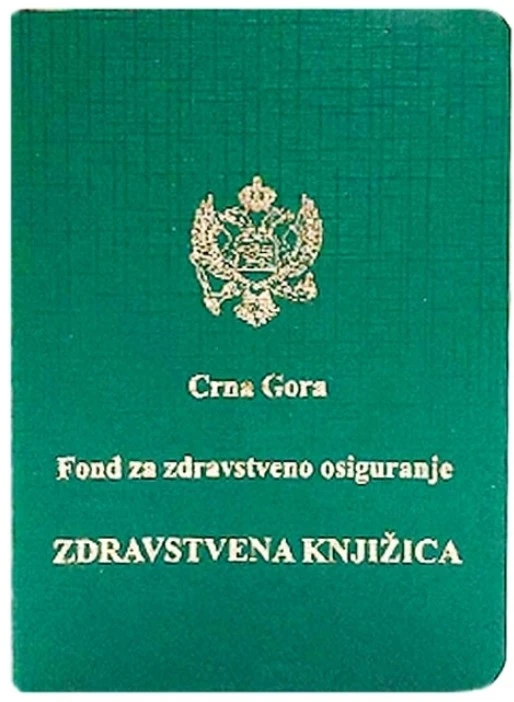
As Montengro’s healthcare system is publicly funded through taxes, most medical services at doctors’ offices, clinics, or hospitals are provided at no direct cost to patients. To access public healthcare services, you must have a valid health insurance card (zdravstvena knjižica), which you must present each time you seek medical treatment.
You should apply for your health insurance card through a local branch of the Health Insurance Fund (Fond za zdravstveno osiguranje Crne Gore) as soon as you have obtained your residence permit. When applying for your health ID, you will need to present identification such as your residency card, passport, and birth certificates for any dependents. In Montenegro, every family member is issued their own Health ID.
Travel & Private Supplementary Health Insurance
It is strongly recommended that you purchase travel health insurance to pay for your healthcare needs until your Montenegrin Health ID is issued and you are fully enrolled in the public healthcare system. In fact, having valid travel health insurance is one of the requirements for obtaining a temporary residence permit in Montenegro.
While the Montenegrin public healthcare system covers many essentials, it is wise to consider purchasing supplementary private health insurance. Private insurance can offer faster access to diagnostics & treatment, a wider choice of doctors, and services not fully included under the national insurance plan like preventive screenings, specialist consultations, and treatment abroad.
Money, Taxes, and Banking
The currency used in Montenegro is the euro (€), which is divided into 100 cents (¢). The common European currency has the following denominations:
- Coins: 1 cent, 2 cents, 5 cents, 10 cents, 20 cents, 50 cents, 1 euro, 2 euros
- Banknotes: 5 euros, 10 euros, 20 euros, 50 euros, 100 euros, 200 euros, 500 euros
Montenegro is still largely a cash‑based society, although major credit and debit cards are widely accepted in larger cities and tourist areas. Exchange offices are not very common in Montenegro, and most people change money at commercial banks. Please note that you are not allowed to bring more than 10,000€ into or out of the country without declaring it to Montenegro’s customs authorities..
Withdrawing Money
When withdrawing money from ATMs in Montenegro with a foreign debit or credit card, be aware of “dynamic currency conversion” and potentially high flat fees. To avoid these, always choose to withdraw in EUR and avoid any currency conversion offered by the ATM. This ensures that your home bank handles the conversion at a significantly better exchange rate.
The majority of banks in Montenegro charge a withdrawal fee (except Ziraat Bank), typically ranging from 5€ at most commercial banks to as much as 9€ when using smaller Euronet ATMs often located in kiosks or busy old-town areas. Be aware of your own bank’s daily withdrawal limits, and always notify them of your intended use abroad to avoid declined transactions or card blocks.
Sending and Receiving Money
To send or receive money without having a local bank account, you may be best advised to use either Western Union or RIA Money Transfer. And once you hold residency in Montenegro, you will be able to open a multi-currency with any bank, allowing you to make quick transfers within the Eurozone using IBANs or SWIFT codes for international transfers outside the Single Euro Payments Area (SEPA).
Please note that Montenegro uses a dual account system within its banking framework, offering both domestic and international accounts for individuals and businesses. This means that international money transfers must be conducted through your international bank account (can be held in any currency), while domestic transactions within the country are processed via the national payment system.
Deposit Protection
All banks in Montenegro are regulated by the Central Bank (CBCG – Centralna Banka Crne Gore) and are therefore safe places to keep your money. They are required to participate in the Montenegrin Deposit Insurance Fund (Fond za zaštitu depozita), which guarantees deposits of up to €50,000 per depositor, per bank, in case of bank failure. For more information, visit www.fzdcg.org.
Costs of Living
Montenegro still remains among the most wallet-friendly European destinations for expats and retirees. Ranked 31st on the Cost of Living Index [Europe] by Numbeo, your funds can go significantly further here compared to most countries in Northern Europe, Canada, or the U.S., where rent alone often consumes a large portion of the monthly paycheck.
Depending on where and how you choose to live, prices can vary quite dramatically between regions in Montenegro. Pockets of higher prices are found in coastal resort towns like Tivat, Kotor, and Budva. For instance, if you choose to live near a superyacht marina (Porto Montenegro, Lustica Bay, Portonovi), your monthly costs will unsurprisingly be much higher compared to less luxurious neighborhoods.
In general, living in Montenegro can be 30% to 70% cheaper than in your home country, with average monthly expenses (including rent) ranging between 1,200€ and 1,700€ for a single person, and between 2,200€ and 3,200€ for a family of four, depending on location, lifestyle preferences, and housing type.
Tipping
Tipping in Montenegro is customary and appreciated but not strictly expected. A tip of 10% is generally considered generous, and is a common guideline for restaurants with table service while in cafes, rounding up to the nearest euro or adding 1– 2€ to the bill is typical for smaller amounts. The most common Montenegrin expression for a tip is bakšiš.
Taxation
Taxes are often a top concern among expats and entrepreneurs considering a move to Montenegro. It is good to know that Montenegro offers a simple and efficient tax regime, and consistently ranks well in international tax competetiveness. While it may not be a tax haven, as a resident of Montenegro, you can still take advantage of relatively low tax rates (9% – 15%) for both individual and corporate income.
Personal Income Taxes
For salaried employees, income taxes – alongside social security contributions – are automatically deducted from their paychecks each month by their empoyer, and they are typically not required to file an income tax return. However, if you are self-employed or a sole trader, you must submit an income tax return (GPP-FL) once a year and pay your personal income taxes in monthly installments.
If you have earned income from capital gains, royalties, or rentals, you must also submit a GPP-FL to the tax authorities by the deadline of April 30th. You are required to include income earned both inside and outside of Montenegro. Similar to other countries, income taxes in Montengro are marginal and progressive, ranging from 9% to 15%. This means that the more you earn, the more taxes you will pay, but the rates are not excessive as in other European countries.
What’s more, Montenegrin taxation is based on your tax residency status, which is determined by two things: the number of days you spend in the country (183 days or more in a 12-month period) and the center of your vital interests, such as your permanent home, economic activity, or family ties. Your address on December 31 of each year determines in which municipality you have to file your tax return.
Value Added Taxes
Residents of Montenegro are also taxed on the purchase of most consumer goods and services. Whenever you buy something, a Value Added Tax (VAT) will be added to the final price. The standard VAT rate in Montenegro is 21% (also applied to new construction), though reduced rates of 7% or 0% may apply to specific items such as basic foodstuffs, medicines, or books.
For businesses, there is a possibility of input tax deduction, so that the Value Added Tax is ultimately borne by the end consumer. This lets companies that are above the VAT threshold of 30,000€ (calculated on a 12-month trailing basis) offset the Value Added Tax paid on business-related expenses against the VAT they collect from customers. Businesses must submit monthly VAT reports.
Property Taxes
If you own property (land, houses, or commercial buildings) in Montenegro, you are required to pay annual property taxes to the local municipality. The calculation of the exact amount of property taxes due involves two key components: the assessed property value by the local tax office and the tax rate set by the local municipality.
The assessment considers your property’s size, age, location, and improvements or renovations. For example, if your house is valued at 400,000€ and the municipal tax rate is 0.4%, as a homeowner, you would owe 1,600€ in property taxes for the year. Property tax rates vary widely among regions and municipalities in Montenegro, typically ranging from 0.25% to 1.00% for primary residences.
A real estate transfer tax is levied on all propertiy transactions taking place within Montenegro, and is generally the sole responsibility of the buyer. The tax rate typically ranges from 3% for properties valued up to 150,000€, to 6% for properties over 500,000€. The transfer tax is marginal, meaning that for a purchase price of 700,000€, 3% is charged on the first 150,000€, 5% on the next 50,000€, and 6% on the final 200,000€.
Corporate Taxes
Corporations in Montenegro, most notably limited companies and sole proprietorships, are subject to a corporate income tax (porez na dobit pravnih lica). The standard rates are as follows:
- 9% for annual profits up to 100,000€,
- 12% for profits between 100,000€ and 1,500,000€,
- 15% for profits exceeding 1,500,000€.
The corporate tax is marginal, meaning that not all portions of profit are taxed at the highest rate. For example, if a business were to earn 150,000€ a year, only the profit exceeding the lower tax threshold of 100,00€ would be taxed at the higher rate of 12%, while the initial portion would be taxed at the lower rate of 9%. The business’s effective tax rate would be 10.5 percent.
Banking
A Montenegrin bank account allows you to set up direct debits to pay your bills, receive your salary or rental income, receive funds through direct deposit, or use a debit card for purchases. You can have access to many of these services 24 hours a day, seven days a week through online and mobile banking applications offered by most Montenegrin banks.
Opening your bank account
To open a bank account in Montenegro, you must go to the bank in person and present a valid photo ID (passport or national ID card), proof of address (e.g. lease agreement or utility bill that includes both your name and address), valid residence permit, and a work contract or proof of property ownership in Montenegro. Some banks may also ask for a notarized signature (OP obrazac).
You can use a checking account (tekući račun) to pay your (utility) bills, receive salary payments, transfer Euros domestically, and withdraw cash from ATMs with a credit or debit card. Most checking accounts have a small monthly fee associated with them, but usually have lower bank service charges as opposed to saving accounts.
If you want to send and receive money internationally, make sure to also open an international bank account (devizni račun). Most banks in Montenegro offer multi-currency accounts, allowing individuals and businesses to pay, receive, and hold funds in Euros (€) U.S. Dollars ($), British Pounds (£), and other currencies without needing to open separate accounts for each currency.
Savings and investment accounts, which are are also available in multiple currencies, allow you to earn higher interest on your deposits when compared to checking accounts. However, they also come with a downside: you may not be allowed to withdraw your funds at any time, or you might need to wait until the end of a fixed term to avoid losing interest.
Debit cards and other payment methods
Debit cards are accepted in many places and are an increasingly popular form of payment in Montenegro, particularly in urban areas, beach communities, and larger resort towns. They are a safe, convenient way to be used for ATM withdrawals, online payments, and pay for purchases directly from your bank account, typically under networks like Visa, Mastercard, or American Express.
Contactless ‘tap-to-pay’ payments are supported by most point-of-sale (POS) terminals and ATMs in Montenegro, allowing you to use NFC-enabled cards or mobile wallets like Apple Pay and Google Pay for everyday purchases. However, some smaller shops, rural businesses, or government offices may still only accept cash, so it’s wise to carry some notes and coins with you just in case.
Another method that remains popular, especially for business-to-business transactions, bill & tax payments, is the use of manual payment slips, locally known as virmani. Pink virmani are typically used for non-cash (bank-to-bank) payments, while yellow ones are reserved for cash transactions made at the bank counter.
Loans and credits
In Montenegro, you’ll find many different types of loans and credit options, with various fees, charges and interest rates. Loans are typically issued in Euros (€), and must also be repaid in Euros.
Credit cards
Even though credit cards can offer the same practicability and ease of use as debit cards, the latter are far more common in Montenegro for everyday purchases. However, anyone who has tried to reserve a rental car will know that it’s virtually impossible to do so without a credit card. What’s more, they allow you to borrow money interest-free for up to 45 days.
But if you don’t pay the full amount back by the deadline, a relatively high interest rate will be applied to the entire balance, and will continue to accrue until you pay off the full amount. As a resident, you can apply for credit cards at most Montenegrin banks. Always take the time to read the major terms and conditions thoroughly, fully understand them, and keep a copy for your records.
Personal bank loans & payday loans
Personal bank loans in Montenegro are either purpose-specific (e.g. home improvement, car purchase, tourism, travel, education, etc) or general-use consumer loans, available to Montenegrin citizens and foreigners with a valid residence permit. To qualify for a personal loan, you need to receive regular salary payments into a Montenegrin bank account and show proof of income such as an employment contract, proof of self-employment, or evidence of a pension.
“Payday loans” are short-term loans with high interest rates that you promise to pay back from your next paycheck. In Montenegro, they are typically offered by microcredit companies and represent a very expensive way to borrow money. For more information on the cost of payday loans, consult the payday loan provider’s website or contact center of the Central Bank of Montenegro (www.cbcg.me), which protects and informs consumers of financial services.
Utilities, Internet & Mobile Access
In Montenegro, utilities (like electricity, waste collection, and water), as well as TV and internet services are generally not overly expensive, and are provided by a mix of private and public companies. If you’re renting a house or apartment, the costs may already be included in your monthly rent.
Setting up internet at home
The main internet service providers in Montenegro – Telekom, m:tel, and One – regularly offer promotions to new customers, such as discounted monthly rates, free installation packages, or additional TV channels and mobile data for the first few months of a 12- or 24-month contract. Not all of them offer fiber-optic internet nationwide, but Telekom currently has the widest fiber-optic coverage.
Home broadband in Montenegro is often bundled with TV, mobile internet, and landline phone services, offering better value compared to signing up for each service separately. When renting a new property, the contract may still be in the owner’s name, and it may not always be required to transfer the account in your name or switch providers. In case you do want to sign up for a new contract, it rarely takes more than a week to have the service activated.
Cable TV
Cable TV services are offered by several providers, including Telekom and some regional operators like Telemach and Total TV. Different types of plans are available depending on how many channels you want and how much you want to pay, but most packages cost no more than 20€ per month. However, premium packages that include extensive sports and movie channels can be pricier.
What’s more, a rising number of Montenegro residents are opting for subscription streaming services like Netflix and Prime Video instead of traditional cable or satellite TV options.
Mobile phone & internet
Available as either a standalone service or packaged with internet and TV, the mobile phone coverage in Montenegro is generally very reliable and widely accessible – even across many rural areas – and 5G networks are becoming gradually available in major cities like Podgorica, Nikšić, and coastal towns. Be aware however that a temporary residence permit is required before you can register a mobile phone contract in your name.
Mobile internet speeds are generally sufficient for video calls, remote work, and everyday browsing, though speeds may vary in more remote or mountainous regions. Prices for mobile plans are very competitive compared to Western Europe, with the following often included as standard: a generous data allowance, unlimited local calls and SMS, and often free access to popular social media apps like Youtube without using up your mobile data.
Cell phone and internet while you wait
If you’re visiting as a tourist or are waiting for your residence permit to be processed, it is highly recommended that you get a prepaid SIM card first. These commonly called tourist packages are offered by all major mobile network operators and come with very generous data plans, sometimes offering up to a terabyte of mobile internet.
You can either purchase these packages directly at the mobile provider stores (Telekom, One, m:tel) or find them at gas stations, kiosks, supermarkets, and the international airports of Podgorica and Tivat. All SIM cards must be registered with your passport (usually done by the vendor) prior to use, and the activation is typically instant or takes only a couple of minutes.
Prepaid SIM cards are valid for a limited period, commonly one month, but can be topped up to extend validity. Top-up options include online, mobile apps, kiosks, and retail shops. It’s also possible to keep your prepaid SIM number when switching to a postpaid plan later on. Mobile data is fast, and you can use mobile hotspot to connect your laptop and other devices.
Electricity (struja)
The sole electricity provider in Montenegro is EPCG (Elektroprivreda Crne Gore) and almost all properties will already have utility accounts in place. In rented properties, electricity bills may either be included in your monthly rent or paid separately by the tenant, which is more typical for long-term leases. If you are not planning to stay at the same property for more than a year, it might not be neccessary to transfer the electricity account to your name, and simply start paying the monthly bills as is.
Your electricity bills will either arrive by mail or e-mail, and can be paid at post offices, banks, online via EPCGs website, or via mobile apps such as Digitalni Kiosk. When paying your bills, you’ll soon find out that electricity is likely significantly cheaper here than at your previous address: many Montenegrin households don’t have to budget more than 40,00 €/month for a typical consumption of 700 kWh.
Water (voda)
Unlike its electricity grid, Montenegro’s water supply is publicly managed but operated by municipal utility companies (e.g. Vodovod Budva, Vodovod Bar, Vodovod Tivat, etc). They perform quality checks, handle water distribution, as well as maintenance and billing. The tap water in Montenegro is generally safe to drink, and the price of fresh drinking water is very affordable.
According to the Energy and Water Regulatory Agency of Montenegro (REGAGEN), the price of drinking water in Montenegro is approximately 0.70€ per cubic meter, including wastewater charges. This means tha monthly household bills rarely exceed 20€. Water bills are delivered to your physical address or sent via email, and can be paid online via the Digitalni Kiosk App or at any post office or bank. You usually don’t need to transfer the account unless you’re the property owner.
Garbage collection (čistoća)
In Montenegro, residents pay a modest monthly garbage collection fee (typically between 5 and 10 € per month) that is transferred to their local utility company (e.g. Komunalno Budva or Čistoća Podgorica). The rates are sgnificantly higher urban businesses. Most apartment complexes have communal recycling bins, however, door-to-door pickup is gaining in popularity in single-family neighborhoods.
Furniture and other larger items must be disposed of separately through bulky waste collection services offered by the public utility companies like Komunalno or by taking it to a recycling yard. As with electricity and water, you may opt to pay your monthly bills online via Digitalni Kiosk. An account transfer may not always be neccessary – discuss with your landlord.
Tips for Newcomers
Even though most utility providers don’t require you to open a local bank account – you can pay bills in cash at banks or post offices – you should still consider setting up utility payment templates via your bank once you have obtained your Montenegrin residency ID. As soon as you move into your new home, ask your landlord if you need to transfer utility accounts in your name or just continue to pay the bills as is.
Transport
Podgorica (TGD) is Montenegro’s main international airport, and handles most year-round flights, while Tivat Airport (TIV), a small aerodrome halfway between Kotor and the coastal town of Tivat, serves the entire Bay of Kotor. Two budget airlines, Ryanair and Wizzair, have the largest networks of affordable routes to and from major European cities.
For long-haul travel, residents and visitors also take advantage of Montenegro’s vicinity of Cilipi Airport (DBV) in Dubrovnik (Croatia) and Tirana Airport (TIA), located in the neighboring country’s capital city. Tourists also arrive in Montenegro by road, rail and over the water.
Trains
While Montenegro may not be one of the most rail-friendly countries in Europe, taking the train can often be the most affordable and surely one of the most scenic was to travel. Montenegro’s rail network extends across the country, from Podgorica and Bar in the south to Niksic in the northwest. Depending on where you are in Montenegro, for example on the stretch from Budva to Herceg Novi, there may be no rail access at all.
Trains in Montenegro can be relatively old, but are safe and comfortable. You can check timetables and buy tickets from Railway Transport of Montenegro (Željeznički prevoz Crne Gore) by visiting www.zpcg.me, calling +382 20 441 197 or going to a train station in person.
Intercity and Regional Buses
If you have to rely on public transport, taking the bus is generally the best way to travel along the coast, and is often the only available transport option between smaller towns. Take note however that during the peak summer season, congested roads can significantly delay travel times. On longer journeys, bus drivers make stops from time to time so that passengers can buy some drinks, food, and other necessities.
The network of Montenegrin bus routes is run by several private operators (e.g. EURO LINE TRAVE, R-line, Jadran Ekspres, etc) rather than a single national bus company, which means schedules, ticket prices, and levels of comfort can vary as well. You can get more information and buy tickets by calling or visiting your local bus station or by using online platforms such as busticket4.me.
Ferries
Seasonal boat lines connect Montenegro’s hidden beaches and charming rivieras (e.g. Budva Riviera & Bar Riviera), and are a popular mode of transportation, particularly during the summer months. While excursion boats commonly carry passengers from one beach or coastal town to another, ferries transport both passengers and vehicles.
The Kamenari-Lepetane ferry line is by far the most frequented, and connects Herceg Novi to Tivat and Kotor. Ferry tickets can be purchased on-site or online via trajekt.me/en/. Additionally, the seasonal high-speed catamaran route between Dubrovnik and Budva/Kotor – operated by Adriatic Lines – offers a scenic alternative to congested road travel along the Adriatic coast.
Jadrolinija connects the port town of Bar with the Italian harbor cities Bari & Ancona. Schedules may vary depending on time of year and weather conditions, so it’s advisable to check departure times in advance. You can buy tickets at Bar’s, Ancona’s, and Bari’s local port offices or online at www.jadrolinija.hr/en.
Public Transport
Affordable local bus routes build the backbone of almost all public transport systems in Montenegrin municipalities. Operated by either public or private bus companies (there are no metros in Montenegro), the combination of fixed routes and schedules makes sure that commuters and visitors reach most parts of a city, town, or village with relative ease.
Monthly commuter passes offer a small discount compared to buying individual tickets, and are available in Podgorica (Gradska Kartica Podgorica) and the Bay of Kotor area (Blue Line). Find out more about available public transport options in your town or city by visiting local bus stations, where you can also purchase tickets. Otherwise, you can also buy tickets directly from the bus driver.
Taxis
Unregistered taxis in Montenegro are notorious for not playing by the rules. If you can, get a taxi from an official taxi rank, don’t take rides from drivers who approach you, and use ride hailing apps whenever possible. This will drastically lower the chances that you’ll be taken advantage of. Moreover, always try to have small change on you so that drivers cannot use the “I have no change” routine as a way to pocket the extra.
In Montenegro, taxis are generally affordable compared to Western European standards. However, take note that a negotiated flat rate will almost always be an elevated rate, and it’s a good idea to confirm the fare before the start of each trip. What’s more, always watch out for an official identification card displayed on the dashboard of the verhicle – taxi companies must be licensed by the municipality they operate in.
When you call for a taxi, the operator will ask you to provide the pick-up address, which may pose a problem due to language barriers. Alternatively, you can catch a taxi at a taxi stand or hail it on the street by waving your hand. Be aware that not all taxis support card payments. If you want to pay by card, consider installing one of the ride hailing apps, including MonteGo, MonteTaxi, and Tesla Taxi, a 100% electric fleet operating exclusively in Podgorica.
Walking and Cycling
Montenegro offers wonderful opportunities to walk and trek. Most old towns are very compact and walkable, and the historic centers of Budva, Kotor, and Herceg Novi are pedestrian-only. One notable downside in smaller towns and rural areas is that sidewalks are not always maintained or available, which can make walking less safe and enjoyable.
Montenegro’s hilly terrain and the absence of intercity bike lanes can make getting around the country by bike challenging. The best bicycle infrastructure can be found in Podgorica, around the Bay of Kotor, and on the Budva Riviera, where dedicated lanes for cyclists are being consistently added. Bike-sharing services (e.g. Nextbike Budva) are limited, but traditional bike rental shops are widely available in the major tourist zones.
Driving in Montenegro
To legally drive a car in Montenegro, you’ll need a valid driver’s licence issued by Montenegro’s Ministry of Interior (MUP) or the government of your home country. You must have it with you – alongside your passport/ID card and vehicle registration certificate – whenever you’re driving.
Driving laws are strictly enforced in Montenegro, and penalties for breaking the law can be severe, including heavy fines, license suspension, and, in serious cases, imprisonment. Traffic police patrols are highly visible and they often conduct roadside stops involving breathalyzer checks and speed monitoring with laser guns.
Despite the potential for heavy fines, the driving culture in Montenegro can sometimes feel unpredictable to newcomers, with frequent overtaking, limited use of turn signals, and occasional disregard for traffic rules altogether. Below are some of the most important driving laws and rules to follow in Montenegro:
- Always drive on the right-hand side of the road.
- Wear your seat belt at all times and ensure that everyone else in the vehicle is also doing so.
- Do not use a mobile phone while driving.
- Use your signals when you turn or switch lanes.
- Headlights must be turned on at all times, even during the day.
- Always give priority to emergency vehicles (police cars, ambulances, fire trucks) when their sirens are flashing. Pull off the road to allow them to pass.
- Winter tires are mandatory between November 15 and April 1 in certain regions.
- Carrying a fire extinguisher in your vehicle is a legal requirement for commercial cars, including small vans and trucks used for private purposes.
- Your car must be registered and you must be covered by an automobile insurance plan to drive.
- Always drive below the speed limits posted on the side of the road. Fines for speeding are expensive and it can potentially lead to your driver’s licence being suspended or imprisonment for very severe transgressions.
- Drunk driving is a very serious offence in Montenegro. If your blood alcohol level is significantly above the legal limit (0,3 per mille) for driving, the penalties can be severe. If you are stopped by the police or involved in an accident with a blood alcohol level of more than 1‰, you can lose your driver’s license and even be sentenced to up to 60 days in prison.
If you are involved in an accident with another vehicle without any injuries, you don’t always have to call the police. If you can agree with the other driver on the circumstances of the accident and who was at fault, you can fill out and sign a European Accident Statement (Europski izveštaj o saobraćajnoj nezgodi) and submit to your insurers instead.
It’s a serious crime to leave the scene of the accident if there’s injury or significant damage. Always use the emergency number (122) to contact the traffic police immediately, call an ambulance (124) if necessary, and remain at the scene until they arrive.
Driving licenses
You can replace your existing driving license or apply for a new one from the local MUP office in the municipality where you are registered as a resident. For the interim period, you should consider getting an International Driving Permit (IDP) if your country does not use Latin script. An IDP will give you a translation of your licence into French and English.
You wil be able to use the international permit to drive in Montenegro for up to 6 months, before you need to convert it to a local one. In case you don’t have a driver’s license yet, you must first pay for driving lessons and pass a written examinaton on the rules of the road. The Montenegrin driving license will allow you to drive anywhere in Montenegro and abroad.
Car insurance
Having car insurance in Montenegro is stricly mandatory, and you must renew your insurance coverage once a year, together with your registation. Unlike in some other countries, your car insurance does not remain valid if your registration expires and the cost of car insurance does not depend on your age or driving experience.
If you regularly use a car that belongs to a relative or friend, you should make sure to have a notarized power of attorney allowing you to use that vehicle. In Montenegro, there are different types of car insurance plans available, including some that solely cover the costs associated with damage and injury to others while others also cover injuries to yourself and damage to your own vehicle (known as ‘kasko’ plans).
Buying or leasing a car
You can buy new or used cars from (authorized) dealerships (e.g. Volkswagen, Renault, Mercedes, Skoda, Kia) or online car marketplaces like autodiler.me. Facebook marketplace is also a popular choice among locals and expats alike. A notarized sales contract is legally required in Montenegro to transfer ownership of every vehicle.
It is recommended that you only purchase a car with a valid registration certificate and technical inspection report, as otherwise, you will be responsible for arranging a vehicle inspection by a licensed mechanic at a tehnički pregled station. The registration must be renewed annually at the same time as obtaining mandatory car insurance.
Instead of buying a car, many locals and newcomers to Montenegro prefer leasing a car. A lease is a legal agreement between you and the dealer in which you agree to pay a monthly rate over a fixed period of time (e.g. 3 or 5 years) and the lessor is usually responsible for vehicle maintenance, insurance, regitration, and inspections. After the lease period ends, the car must be returned to the leasing company in good condition to avoid penalties.
Major leasing companies in Montenegro include Porsche Leasing, Hertz, and Erste Lizing. On the other hand, if you only require a car on occasion or for short periods, it may be benefitial to just rent it from one of the many car rental companies operating in Montenegro. Options for mid-term rentals (1-12 months) are readily available as well.
Working and finding employment
To work in Montenegro, you will need a Unique Master Citizen Number (JMBG) issued by the Ministry of the Interior (MUP). You should apply for a JMBG immediately upon signing your work contract and obtaining your temporary residence permit. For more information on the JMBG and instructions on how to apply, see the section on Residency Options.
Foreign Credential Recognition (Nostrification)
If you are an internationally trained professional and would like to work in a regulated occupation, or, want to apply for residency based on company formation, you will first need to have your credentials recognized by the Ministry of Education, Science, and Innovation in Podgorica.
Nostrification is the official term for the process of recognizing and validating your foreign academic qualifications so that they correspond to a degree or certificate issued in Montenegro. The Government of Montenegro’s website (www.gov.me) provides information on how you can get your credentials nostrified.
Regulated Occupations
In Montenegro, about 130 professions, encompassing a wide range of occupations across various sectors, are officially regulated, meaning individuals must hold recognized credentials to work in those fields. In many industries, professional organizations are responsible for issuing licenses and ensuring that practitioners meet the required qualifications and ethical standards.
Some fields where regulated occupations are commonly found include:
- Healthcare
- Education
- Financial services
- Law and legal services
- Engineering
- Architecture
- Tour guides
- Building inspectors and technical supervisors
Each regulated occupation has its own requirements for obtaining licenses or certificates, typically administered by the municipality, a government ministry, or one of Montenegro’s professional associations. In. Montenegro, only about 15 per cent of jobs are regulated.
Unregulated Occupations
Non-regulated occupations on the conrary, are those that do not require any preceding licensing, certification, or official registration to work in. However, many professions may have voluntary certification requirements, and some employers may even prefer to hire certified candidates. For example a business-related degree may be required for certain types of marketing and sales positions.
Workplace Language Skills
Having strong Montenegrin and English language skills will enable better communication with clients and colleagues. This will allow you to work more effectively, reduce workplace frustration, and build solid relationships where customers or colleagues may otherwise feel that they are not understood or properly listened to.
The level of language proficiency required for employment, especially in higher-level positions, will certainly exceed the level needed for immigration or basic communication. In Montenegro’s tourism-driven economy, strong language skills may be just as important as prior work experience for securing well-paid employment.
Searching for Jobs
The Employment Agency of Montenegro (Zavod za zapošljavanje Crne Gore) is the official national job agency where employers highly welcome applications from abroad. The ZZZCG (www.zzzcg.me) has offices in every municipality, offering job-matching services, vocational training programs, career counseling, and hundreds of job listings.
If you are already familiar with some businesses in Montenegro, it may be smart to first scan their websites and Linkedin profiles for any job vacancies. It is best to search using the keywords “otvorene pozicije” (job offers) or “karijera” (career) if the websites are not in English. Additionally, alwaysask friends and acquaintances about any open positions in their industries.
Likewise, private recruitment agencies such as Heads Adriatic can help you looking for job positions specifically tailored to you and your professional background. You should also be active and post your resume and search for matching positions in Montenegro’s various online job boards, including:
- www.prekoveze.me
- www.radnik.me
- www.jobzilla.me
- www.mnejobs.me
This will allow interested companies to discover your profile and reach out to you directly. You may also look through the well-known international job boards for remote or international companies hiring in Montenegro.
Starting a Business
Another way to earn money in Montenegro is by starting your own company. Our firm, adriacom, is both a service provider and online portal for small businesses and entrepreneurs. We bring together information on taxation, company formation, bank account setup, available business tools, and current residency options in Montenegro.
You can find this information online at www.adriacom.me, by calling the Montenegro information line at +382 69 920 173, or by visiting one of our offices in person (see the website for locations). What’s more, the municipal government in the city or town where you live will likely be another good source of information and support for setting up your business in Montenegro.
Another useful resource for entrepreneurs is the Montenegrin Chamber of Commerce (Privredna Komora Crne Gore; www.komora.me or call +382 20 23 05 45), which offers support, networking opportunities, and information for all businesses operating in Montenegro.
Employment Insurance
If you lose your job involuntarily (e.g., due to layoffs or redundancy), you may qualify for unemployment benefits through the Employment Agency of Montenegro (Zavod za zapošljavanje Crne Gore). Unemployment benefits provide temporary financial assistance (40% of Montenegro’s minimum wage) for individuals who were previously employed and are actively seeking new work.
You may also receive temporary financial assistance if you are pregnant for up to one year after childbirth, paid by the National Health Insurance Fund of Montenegro (Fond za zdravstveno osiguranje). Mothers receive full pay if they have been employed for at least one year before childbirth, and 70% (50%) if they worked at least 6 months (3 months) before childbirth. Fathers are also eligible for paternal leave, however, it is way less common in practice.
If you work in Montenegro, both employers and employees must make monthly contributions (0.5% of the gross salary each) to your unemployment insurance so that you can benefit from it in a time of need. Montenegro’s universal child allowance foresees monthly cash benefits in the amount of 30,00 Euros provided for all children.
Child Care
Childcare in Montenegro is relatively accessible and affordable, at least when compared to Western European standards, and parents can take advantage of a blend of public and private options. In Montenegrin cities and towns, there are various options for child care: (internationally oriented) kindergartens (vrtići), nursery schools, licensed (“drop-in”) day-care centres, and homebased day-care services.
Private kindergartens usually cost between 150 – 350€ / month, offering modern facilities, smaller groups, and often bilingual education in both English and Montenegrin. Some offer Montessori or Waldorf-style curriculums.
Pensions
The Pension and Disability Insurance Fund of Montenegro (PIO Fund) is a mandatory state-run pension program for workers and their families, providing a measure of protection to cover loss of income due to retirement. Your employer will deduct pension contributions directly from your paychecks. The amount you pay is a percentage (currently 20.5%) of your salary. You must contribute for at least 15 years to be entitled to pension benefits.
If you are self-employed, pension contributions are also mandatory, with a fixed rate based on the net business income you have declared for the previous year. The minimum pension is set by law and regularly adjusted for inflation. Your individual pension will depend on the length of your working life and your average salary during contributing years.
You can get more information about the Pension and Disability Insurance Fund of Montenegro at www.fondpio.me/, by calling 020-403-808, or by visiting a PIO Fund Centre (see their website for local telephone numbers and locations).
International Social Security Agreements
Montenegro has signed dozens of international social security agreements with many countries, particularly in Europe and the Western Balkans, including Germany, France, Switzerland, Luxemburg, and the United Kingdom. This allows individuals who have spent part of their working lives in those countries to receive pension benefits abroad and combine insurance periods across multiple countries.
Learning or Improving your Montenegrin
Montenegrin is the sole official language of Montenegro, and an important prerequisite for participating in the working, economic and social life of the country. Even though there are distinct differences in vocabulary and pronunciation among the many regional dialects of the former Yugoslavia, its residents can understand each other without major difficulties.
Montenegrin is mutually intelligible with Serbian, Croatian, Bosnian, and is known for its balanced phonetics and dynamic pitch accent. It has two additional letters (Ś & Ź) compared to the alphabets of its neighbors, and it features seven grammatical cases (incl. Vocative, Locative, and Instrumental) – three more than German. Montenegrin uses both the Latin and Cyrillic scripts.
Today, you’ll find approximately one million Montenegrinophones (including the diaspora) spread across the globe, and 15-20 millon people who can understand it due to mutual intelligibility. In addition, there is a sizeable Albanian-speaking community in Montenegro, particularly in the municipalities of Ulcinj, Tuzi, Plav, and Rožaje, where Albanian is recognized as an official language at the local level.
The importance of Montenegrin
It’s important to learn at least some basic Montenegrin, as most official government services, publications, and documents are available only in the local language. Strong Montenegrin skills are valuable for many additional reasons, such as:
- Understanding Montenegrin signage, transportation information, emergency instructions, and service announcements;
- Opening up more opportunities, especially outside expat-dense or tourist-centric areas;
- Accessing services;
- Helping your children with school work;
- It shows respect for the local culture and makes it easier to form friendships and integrate into the local community
- Meeting and interacting with people; and
- Passing the language requirement for permanent residency and citizenship.
It takes time, energy and commitment to improve your language skills, but the rewards are worth the effort. If you do not already speak Montenegrin (or Serbo-Croatian) at an advanced level, we encourage you to take steps to expand your vocabulary as soon as you arrive in Montenegro.
Available Public Language Classes
For school children: Montenegro’s primary and secondary school systems provide mandatory Montenegrin language classes for children and youth (see the section on Education).
For (exchange) students: The University of Montenegro (UoM) offers free Montenegrin language classes (A1-B1) to incoming Erasmus and exchange students.
For adults: Various public language courses are designed to help you strengthen your language abilities. Classes are either full-time or part-time, during the day, evening, or on weekends. Some are available in a classroom setting with a small group of other adults while others are offered one-on-one, either in person or online. Below are some of the main institutions offering Montenegrin language courses for foreigners:
- Institute for Foreign Languages, University of Montenegro
- Center for Foreign Languages, University Donja Gorica
- Faculty of Foreign Languages, Mediterranean University
Private Language Schools
You may choose to pay for language classes at a private language school as an alternative to the not always available public language courses. Learn Montenegrin quickly through immersive conversation-based classes that encourage thinking and speaking in everyday situations – whether in the city, supermarket, taxi, or train station at one of the following private institutes:
- Montenegrin Learning Center (MLC): Run by Dr. Radmila Radonjić Radulović (Ph.D.), www.learnmontenegrin.me offers a full suite of language learning options, from online self-study modules to mini courses and individual classes, also available in person in Podgorica.
- Lingva Mont: Known for its specialized Montenegrin courses for foreigners and flexible learning formats, their beginner and advanced courses are taught by licensed instructors. Upon completion, you’ll receive a formal recognition for achieving beginner or advanced proficiency in Montenegrin.
- Porta Aperta: Porta Aperta offers courses aligned with the Common European Framework of Reference for Languages (CEFR) across all levels (A1–C2), with classes conducted in small groups of 3–6 students or as personalized one-on-one lessons. They also support school children in preparing for standardized exams in the Montenegrin language.
Montenegro’s Education System
In Montenegro, primary education is mandatory for students between the ages of 6 and 15 (in total nine years of schooling). They are required to be enrolled in either a public or private accredited school by their parents. Because Montenegro offers no formal legal framework regulating homeschooling, parents officially don’t have the right to educate their children themselves at home.
Pre-school education
Daycare and nursery options for young children aged 0-3, as well as kindergartens (preschool – catering to children from 3 up to age 6) are entirely optional for children in Montenegro. However, they are also in high demand by both local and expat parents who seek structured learning environments while they juggle work and other responsibilities.
Make sure to enroll your children and familiarize yourself with the individual education programs on time: some pre-schools emphasize play-based learning while others follow more structured, academics-based approaches. Early childcare educational programs are available in Montenegrin, English, French, and Russian.
Elementary and secondary education
Elementary (primary) and secondary education are the two basic levels of schooling in Montenegro, covering up to 12 years of study across ages 6 to 18 – nine years of primary plus three or four years of secondary. Students who successfully complete secondary school receive a high school diploma or school leaving certificate.
Montenegro offers various types of secondary education:
- Upper secondary general education (“Gimnazija”) – lasts 4 years and leads to a general high school diploma (“Matura”), enabling you to enroll in any university program.
- Secondary vocational education – lasts 3 or 4 years, and leads to a vocational degree. Some vocational programs allow you to study at higher education institutions.
- Art schools and sports gymnasiums – offer specialized arts and sports tracks, combining regular education with enhanced athletic training or art classes.
In Montenegro, a regular school year is typically from early September to June 15. Children attend school from Monday to Friday while schools are closed on public holidays. Some private and international schools may have differing dates though. Registering your children amid the school year is possible – reach out to either your local school board or the Ministry of Education, Science, and Innovation in Podgorica.
Elementary and secondary education at public schools in Montenegro is free although age and residence requirements may apply. Most students attend public schools, however, in the capital city of Podgorica and along the coast, there are also private English-language and French-language schools, offering an alternative to the government-run public schools that solely teach in Montenegrin.
Post-secondary education
In Montenegro, there are many forms of post-secondary education, including universities, faculties, and applied science institutions. Besides the major public universities (for example the University of Montenegro in Podgorica and the Faculty of Fine Arts in Cetinje), students can also choose among a handful or so private universities such as the University of Donja Gorica (UDG) and the Mediterranean University in Podgorica.
All educational institutions are aligned with the Bologna Process and have to go through government quality control to be officially recognized. To find out whether a university or faculty is officially recognized, contact the Ministry of Education, Science, and Innovation, or check the directory of accredited institutions at www.gov.me/dokumenta (click on the search button, then “Lista Licenciranih Ustanova Visokog Obrazovanja u Crnoj Gori”)
Higher education in Montenegro is structured into three cycles, with the first cycle leading to the academic title of Bachelor, the second to a Master’s, and finally the PhD:
- Bachelor’s Degree: 3–4 years (180–240 ECTS)
- Master’s Degree: 1–2 years (60–120 ECTS)
- Doctoral Degree: 3+ years
At most post-secondary institutions in Montenegro, there are two main terms of study per year: September to late December or early January and February until May or early June. During the summer holidays (from June to August, many students take a break from studying to work). In the majority of cases, you’ll have to pay tuition fees, from 500€ to 3.500€ per year, for Bachelor’s and Master’s degrees. For more details, see the section on tuition costs and financial assistance below.
Universities
Montenegrin universities are independent (research) institutions that are, by and large, funded by taxpayers, although students must still pay tuition fees. They offer a range of programs that lead to many types of degrees. A Bachelor’s degree is the basic undergraduate degree, which is usually earned after completing three or four years of study.
Master degree programs lead to more advanced degrees that usually require you to study one to two additional years whereas doctoral programs require at least three or more years of study and research following a master’s degre. In regulated professions like law, medicine, and education, students also have to complete internships and/or pass standardized exams on top of the theoretical part of the degree.
Higher Vocational Schools
Higher vocational schools (srednje stručne škole) focus on practical, career-oriented professional training, offering programs of study that typically last two to three years. They issue diplomas and certificates that will qualify you to work in various professions, including healthcare, construction, various trades (such as carpenter, electrician and plumber), tourism, and many others.
Some higher vocational schools specialize in particular field like the JU Srednja elektrotehnička škola Vaso Aligrudić in Podgorica (electrical engineering) and the JU Srednja građevinsko-geodetska škola Inž. Marko Radević in Podgorica which focusses on construction and geodesy, while others are more generalist in nature.
Admission
Once you have narrowed down your choice of one or more post-secondary programs that arouse your curiosity, the next step is to apply for admission. In order to do this, you will have to familiarize yourself with the exact admission requirements and procedures directly from the college, university, or institute that offers the degree you wish to pursue.
Foreign nationals holding a temporary or permanent residence permit have the same rights as Montenegrin citizens to enroll in most study programs. If you are an exchange student, you have to first register at the foreigner’s office of the chosen faculty and sign a learning agreement. Contact the university’s admission office via email or by telephone, or check the institution’s website for available programs.
The requirements for admission to a degree program in Montenegro are:
- Either a general or subject-specific university entrance certificate
- Transcripts showing a detailed summary of your academic performance in secondary school
- Apostilled birth certificate
- Certificate of citizenship
- Original diploma awarded upon completion of undergraduate/master’s studies (for Master/PhD programs)
Admission to some public universities in Montenegro is competitive, especially for high-demand faculties such as Medicine, Law, or Economics, and typically involves entrance exams. When applying for your post-secondary studies, make sure to research the application procedures well in advance; most universities have firm deadlines and nonrefundable application fees.
If the program you are applying to is taught in Montenegrin, you will be required to demonstrate your proficiency by taking a language test. For example, at the University of Montenegro, foreign (or exchange) students need to show at least Montenegrin level B1 (according to CEFR) to enroll in a degree program.
Credential Recognition
Before being able to pursue master’s and doctoral programs in Montenegro, newcomers need to have their existing educational credentials nostrified (i.e. formally recognized) by the Ministry of Education, Science, and Innovation. To put it another way, you may have to prove that the educational qualifications you obtained in your country of origin (or a third country) are equivalent or comparable to similar credentials offered in Montenegro.
For detailed information about the steps you need to take to get your diploma verified, contact the office of admissions of the university or college of your choice. They will give detailed guidance on the exact requirements for translating your qualifications (if necessary) and how to get them officially recognized in Montenegro.
However, if you wish to arrange for an assessment of your credentials and verification of your foreign diploma, you can consult a trusted service provider like adriacom. Please note that we charge a fee for our services. You can get more information at www.adriacom.me/diploma-recognition-service-in-montenegro.
Legal Essentials in Montenegro
Montenegro’s legal system is a civil law system, historically influenced by Austrian, Hungarian, and Yugoslav law. The Constitution of Montenegro (Ustav Crne Gore) provides for an independent judiciary, led by the Supreme Court (Vrhovni sud), which serves as the highest court of appeal, and a Constitutional Court (Ustavni sud).
The lower two levels of the judiciary consist of 15 Basic Courts (Osnovni sudovi) handling most first-instance cases, including misdemeanours, minor criminal offences, as well as civil (including family and labour) lawsuits while High Courts (Viši sudovi) act as appellate courts and address more serious criminal cases.
The Appellate Court of Montenegro (Apelacioni sud Crne Gore) is a second-instance court – it handles appeals against decisions made by the Basic Courts and High Courts. There also specialized courts, including the Commercial Court (Privredni sud) in Podgorica, which is responsible for business disputes, and the Administrative Court (Upravni sud) for reviewing decisions made by public authorities.
Legal Representation
All individuals in Montenegro, including foreigners, have the legal right to be represented by a lawyer in both civil and criminal proceedings. In fact, there are specific instances (e.g. serious criminal charges) when having a lawyer is dictated by court. Attorneys are called advokati in Montenegro. They must be registered with Montenegro’s Bar Association (Advokatska komora Crne Gore).
Fees for legal representation are primarily regulated by the Bar Association’s Tariff of Fees and Expenses for Lawyers’ Services, but prices may still be subject to variation depending on the complexity of the case and the lawyer’s reputation. Some lawyers in Montenegro may charge by the hour, others flat fees or per-service biling.
Since litigations, trials, and lawsuits are conducted in Montenegrin only, it is always advisable to either have a bilingual lawyer or interpreter/translator with you who speaks both your language and Montenegrin. The culture of legal work in Montenegro may differ from what you’re used to, which can be challenging for non-natives who are not always sure whom to trust.
We have carefully and attentively built a network of vetted Montenegrin attorneys, with law practices located in Podgorica, Budva, Kotor, Bar, and Tivat, who practice law with honor, honesty, skill and dedication. We recommend their services in good faith based on extensive experience from many of our clients who have already worked with them successfully.
Contracts & Documentation
In Montenegro, not all contracts do have to be drafted by lawyers and there is often no specific legally prescribed format required to constitute a valid contract. However, it is common for contracts to be written in the local language. In case one or more parties do not understand Montenegrin, the contract must be translated into English or their mother tongue prior to notarization.
Common contract types, including lease agreements, vehicle & real estate sales contracts, as well as powers of attorney have to be certified before a notary and are usually drafted with legal help. Documents and contracts intended for use abroad often need to be apostilled to be recognized by foreign authorities.
Powers of Attorney
Montenegro often requires a power of attorney to be notarized to be legally binding. A PoA transfers decision-making authority from a principal to one or more agents. Once notarized, it allows the agent(s) to act on behalf of the principal. PoAs are very common in Montenegro, and are used for anything from company formation and making medical decisions to selling, buying, or transfering assets such as cars and property.
Real Estate Contracts
Notarization is mandatory for most property-related contracts, and legal assistance for foreigners investing in real estate is strongly recommended. A sales agreement (kupoprodajni ugovor) must be drafted and subsequently notarized before the transfer of real estate (condos, houses, land, etc) between two or more parties is even possible.
If you are applying for a residence permit in Montenegro, you’ll need a notarized lease agreement (ugovor o zakupu), which must be submitted to the immigration office during the application process. In other situations, notarization of (long-term) lease agreements is not mandatory, although some landlords may still request it.
In the context of inheritance planning, gift contracts (ugovor o poklonu) are frequently used to transfer real estate assets, commonly within families, and take advantage of very low or even zero tax rates. Gift contracts must be notarized and recorded in the land registry before they are considered legally valid and enforceable.
Marriage Contracts
Getting married in Montenegro is relatively straightforward and will greatly simplify the process of family reunification for many couples and their underage children. Whether being a resident or not, you’ll have to provide paperwork that certifies your identity and your eligibility to marry, such as a birth certificate and a certificate of no impediment (or equivalent).
In some case, legal assistance may be recommended before entering into a marriage contract. Prenuptial (before marriage) and postnuptial (after marriage) agreements are not very common among Montenegrin nationals, but are used increasingly by foreign or mixed-nationality couples who wish to define the separate property status of their premarital assets.
Divorce Settlement Agreements
The divorce settlement agreement is a written document aimed at memorializing any agreements reached between both divorcing spouses as to child custody, child support, alimony (also referred to as spousal support), and the division of assets and debts. When there is mutual consent, the process is often staightforward and inexpensive with legal help.
An attorney can help you draw up the settlement agreement, which becomes a legally binding contract once signed by both spouses, and a binding court order once enacted within your final divorce decree. If mutual agreement is not possible, your case will probably end up in court, where a judge will decide on all your issues for you.
Foreign divorces taking place outside Montenegro must go through a formal legal process called “recognition of a foreign court decision” (Montenegrin: priznanje strane sudske odluke) in order to be considered valid before Montenegrin courts and other institutions.
Real Estate Due Diligence
In Montenegro, the due diligence process in real estate transactions typically takes place before the seller accepts an offer and before the deal is finalized. It gives buyers a window of time to protect themselves from making unwise investment decisions, and should be taken very seriously. A real estate agent will seldomly be the right contact to help you conduct due diligence on a property; consider consulting with a professional property lawyer instead.
Once any signs of (structural) damage to the property have been ruled out, the next step usually involves checking the property’s financial and legal status. Hidden claims, liens, unpaid taxes, and whether the property was built with a proper building permit are all things to take into consideration before signing the contract. This can all be achieved by conducting a detailed property title search.
Buyers who go ahead with the purchase of a property without the representation of an experienced real estate lawyer, may encounter costly legal disputes later on. The risks almost always outweigh potential savings a few hundred Euros in due diligence fees. If you’d like an introduction to an expat-vetted professional, contact us.
Hiring a Criminal Lawyer
It may seem like common sense to enlist the assistance of a trusted criminal defense attorney to help you with your case if you are accused of a crime or misdemenor in Montenegro. Let your lawyer speak on your behalf to eliminate all chances of you being pressured into testifying when you prefer not to take the stand.
An experienced and knowlegeable defense attorney can navigate the complexities of the Montenegrin legal system and outlining your stance effectively before any judge. They can be instrumental in helping you beat accusations and work to reduce your sentence – in case there is little to no likelihood of you being found innocent. If you’d like an introduction to an expat-vetted defense lawyer, feel free to contact us.
Police
Law enforcement in Montenegro is the responsibility of the Police Directorate of Montenegro (Uprava policije Crne Gore), which is the national police force of the country and operates under the authority of the Ministry of Interior (MUP). The two main police forces are the General Police (policija), the primary unit responsible for maintaining public order, and the Border Police (granična policija), which handles border security and migration control.
The Special Purpose Police Unit (Specijalna jedinica policije or SJP) and the Financial Intelligence Unit are specialized tactical units responsible for dealing with financial crime, smuggling, and the illicit drug trade. There is also the Traffic Police who regulate road safety, and the ‘Foreigner’s Police’ (Odjeljenje za strance, vize i boravak), which oversees visa issuance and residence permits.
If you need to call the police in an emergency, dial 112. The number for your local police department can be found in the table below:
Local Police Department | Phone Number |
Bar | +382 30 312 126 |
Berane | +382 51 231 285 |
Bijelo Polje | +382 50 432 760 |
Budva | +382 33 451 238 |
Cetinje | +382 41 231 007 |
Danilovgrad | +382 20 81 2222 |
Herceg Novi | +382 31 322 715 |
Kolasin | +382 20 865 153 |
Kotor | +382 32 325 635 |
Niksic | +382 40 282 886 |
Pljevlja | +382 52 321 116 |
Podgorica | +382 20 224 804 |
Rozaje | +382 51 271 395 |
Tivat | +382 32 671 422 |
Tuzi | +382 20 224 804 |
Ulcinj | +382 30 313 542 |
Zabljak | +382 52 361 309 |
Being stopped by police in Montenegro does not have to become a stressful experience – the police are there to protect the community and prevent criminal activity. Never resist arrest, even of you consider the arrest to be unfair. Always follow the officer’s commands, and present your passport and/or driver’s license when instructed to do so. Attempting to bribe an officer is a serious criminal offense.
Your Rights and Civic Duties
In Montenegro, all residents are equal before the law and have equal social dignity, without any discrimination regarding race, sex, language, religion, or political or other personal beliefs. Among the fundamental principles of Montenegro’s 2007 Constitution are the rule of law, separation of powers, and the guarantee of minority rights. The Montenegrin Constitution further safeguards:
- The right to freely express your beliefs and opinions, including through an independent press;
- The right to freely associate with others and to peacefully assemble;
- Right to privacy and protection of personal data;
- Freedom of religion and belief;
- Right to a fair trial and legal protection;
- The right to protection from unlawful or unjust arrest or detention;
- Right to education and access to public services;
- Right to vote and political participation;
Residents of Montenegro enjoy equality of treatment, opportunities, and access to all major government services (education, healthcare, employment, housing, social services, and pensions) between women and men, regardless of their sexual orientation. In 2020, Montenegro legally recognized same-sex partnerships, granting many rights similar to those of marriage.
These rights come with meaningful responsibilities, including:
- Respecting Montenegro’s laws;
- Learning Montenegrin;
- Working to be able to provide for yourself and your family;
- Helping others in your community; and
- Protecting Montenegro’s cultural heritage and natural environment – Montenegro was the first country in the world to formally adopt the concept of an Ecological State, and these principles were later enshrined in its Constitution once it became independent.
Diversity as one of Montenegro’s strengths
Montenegro has a centuries-long tradition of accommodating the linguistic, cultural and religious differences of its diverse population, fostering a spirit of coexistence among Montenegrins, Serbs, Bosniaks, Albanians, Croats, and the growing number of expats and digital nomads who share its small territory.
One key strength of Montenegro is that it is diverse in a different way. Unlike multiculturalism in the West, which often involves parallel societies or newer migration waves, Montenegrins are encouraged to maintain those traditionally close family ties and cultural traditions, and yet, adapt to a modern, pluralistic society where diversity is seen as a strength and all citizens contribute to a common civic identity.
Helpful Ressources
From food delivery apps to the comprehensive emergency contact list, we’ve gathered a variety of helpful resources to support you in navigating day-to-day life like ordering food and finding valuable assistance – exactly when you need it.
Language and Communication Apps
Google Translate: A must-have for any expat, retiree, or digital nomad, as not everyone you’ll meet in Montenegro, will speak fluent English. Montenegrin is not natively available but you can switch to Serbian, Croatian, or Bosnian. Google Translate offers text, speech, and camera translation features.
Viber: More popular than What’s App in Montenegro, Viber is a must-have call and messaging app, offering free calls and messages to other Viber users. It is widely used in Montenegro by individuals and businesses alike, including your landlord and utility providers.
Telekom, m:tel, One: Each cell phone provider in Montenegro has its own app, helping you to manage your bills and services on the go. Track your data usage, add optional services, and make changes to your plan – straight from your mobile phone.
Navigation, Transportation & Food Delivery
Google Maps: For walking and driving directions, use Google Maps over Apple Maps. You can download detailed maps and routes of areas that interest you, and navigate them offline. Your blue location pin will work without internet connection. So if you have downloaded the map of Kotor, you can get around all day without using any mobile data.
MyPatrol: MyPatrol is a crowdsourced app that allows users to view and report radar traps, cameras, and the location of police patrols – perfect for expats who drive themselves.
MonteGo: This ride-sharing app is great for booking easy rides, and is available in many locations such as Podgorica, Tivat, Kotor, and Budva. It’s reliable and easy-to-use – essential when public transport isn’t an option.
AllTrails: A life saver in Durmitor, Prokletije, and Kolasin, offering curated hiking guides, with photos, elevation profiles, distances, and user reviews. Consider supplementing it with maps.me for offline navigation and exploring remote trails.
Busticket4.me: This website is perfect for expats relying on bus travel. Busticket4.me provides real-time bus schedules and routes, also allowing you to also buy tickets online.
Glovo: Similar to Uber Eats and DoorDash, Glovo offers food and grocery delivery from a wide range of restaurants, cafes, and shops located across the country.
Accommodation and Real Estate Apps
Booking.com: Similar to Airbnb, Booking.com is an online platform, commonly used by visitors and expats for booking short-term accommodation (hotels, vacation rentals, rural retreats, etc) in Montenegro.
Airbnb.com: Alternatively, you may also check listings on airbnb. However, in Montenegro, it is not quite as popular as booking.com. Great for finding unique properties and monthly stays for your first weeks after landing in Montenegro.
Estitor.com: Estitor is a mobile-friendly website for real estate listings. Browse through a catalogue of all types of properties, including apartments, houses, land, commercial spaces, hotels, and new developments.
Financial and Payment Apps
Digitalni Kiosk: Probably the most essential payment app in Montenegro, making it possible to pay for almost anything online without going to the bank or postal office, including utility bills (phone, electricity, water, etc) and parking tickets.
Erste mBanking: If you have an account with Erste Bank (www.erstebank.me), their mobile banking app comes in handy for managing your daily finances on the go when living in Montenegro.
Wise: Save on online money transfers between Montenegro and other countries by taking advantage of Wise’s (formerly: TransferWise) mid-market exchange rates.
Emergency contacts
General Emergency (EU standard): 112
You can dial 112 – the single European emergency number – free of charge from all (mobile) telephones in Montenegro. Calling this number will automatically redirect you to police, fire, or medical services depending on the individual situation.
Police (Policija): 122
Dial 122 (the direct line to the police) if you or someone else is in danger and require immediate police assistance – for example, if you’re being threatened or witness a crime in progress.
Fire service (Vatrogasci): 123
Dial the 123 immediately if you have any type of fire in your home (small or large) beyond what you can handle yourself, or if you suspect a fire, especially if it’s spreading or endangering life.
Emergency Medical Services (Hitna Pomoc): 124
Call the Emergency Medical Services (124) immediately in case of life-threatening illness or injury, or when you are unsure if a situation is serious enough to warrant immediate professional help.
Coastal and Maritime Emergencies (Pomoc na Moru): 129
When caught in severe storm conditions or when having an accident at sea, call 129, the emergency number of the rescue unit within Montenegro’s Maritime Safety Department.
Road Assistance (Auto Moto Savez Crne Gore – AMSCG): 19807
Been in an accident and need roadside help? Call 19802 or +382 20 234 999 for 24/7 breakdown assistance.
Dental Emergency Assistance:
Call your nearest Dom zdravlja and request the on-call dentist. Alternatively, visit the emergency department of the main public hospital (Klinicki Centar Crne Gore or KCCG) in Podgorica.
Poison Control: +382 20 412 858
In the event of suspected poisoning, you can contact the Poison Control Center in Podgorica, which operates under the Ministry of Health.
Telecommunications Companies: 1500 / 1600 / 1700 / 1800
Update SIM settings, request configuration details (e.g. GPRS/APN), activate or deactivate services, and resolve other (technical) issues by calling or sending a SMS to 1500 (Telekom), 1600 (m:tel), 1700 (One), 1800 (Telemach).
Sources of Information
As a newcomer to Montenegro, there are various sources of information to help you meet your needs, days, weeks, and months into your relocation journey. Information is available on the Internet, in printed publications and through in-person services.
City Maps
Even though many consider them a relic of the past, you can still buy maps of Montenegro at bookstores, petrol stations, or post offices. Most tourist information centers (turističke organizacije) offer free maps, brochures, and other promotional materials covering the Bay of Kotor, and the Rivieras of Budva, Bar, Ulcinj, and beyond.
To make it easier for tourists to navigate their way around Montenegro’s national parks and mountainous areas, specialized (hiking) maps highlighting scenic trails and available outdoor activities can be found at the tourist info centers of Kolasin and Durmitor National Park. Additionally, event calendars and thematic maps such as those featuring popular wine routes, historical sites, or cultural festivals are readily available at many hotels, restaurants, and other tourist spots
Government Information Sources
Montenegro’s central government and most municipal governments, as well as local tourist organisations have websites with information in English that are also targeted at newcomers. These are listed in the table below.
| Government websites |
Use the search function or browse through the list of ministries, departments, and agencies to find the one responsible for the topic or service you’re looking for. Montenegro.travel is the official tourism portal of Montenegro, managed by the National Tourism Organisation. |
| Municipality | Website(s) |
|---|---|
| Herceg Novi | https://www.hercegnovi.me/en/ https://www.hercegnovi.travel/en |
| Tivat | https://opstinativat.me/en/ https://tivat.travel/en/ |
| Kotor | https://www.kotor.me/en/ |
| Budva | https://budva.travel/en |
| Ulcinj | https://ulcinj.travel/en/home-2/ |
| Kolasin | https://kolasin.me/en/ |
| Žabljak (Durmitor) | https://tozabljak.com/en/ |
| Podgorica | https://podgorica.travel/en/homepage/ |
Consumer Information
Montenegro’s Office of Consumer Affairs (Centralni informacioni sistem za zaštitu potrošača or simply CISZP) exists to help consumers make well-informed decisions. On their online hub at www.potrosac.me, you can familiarize yourself with your consumer rights under Montenegrin and EU law, as well as submit complaints about faulty products or unfair practices, and report dangerous goods.
Libraries
Public libraries are an excellent source of free information for newcomers. Most offer internet access and a variety of resources on many different topics. Many libraries have computers with internet in their reading rooms, available to members and visitors. They also often have foreign literature collections in a variety of world languages, including English. Staff can help you find the information you need.
Embassies in Montenegro
For passport renewals, lost documents, arrest or detention, becoming a victim of a crime, or other emergencies, contact your nearest embassy in Montenegro.
| Country | Address | Phone | |
|---|---|---|---|
| Albania | Podgorica – Bulevar Džordža Vašingtona 98 | +382 20 671 772 | [email protected] |
| Austria | Podgorica – Ulica Svetlane Kane Radevic 3 | +382 20 201 135 | [email protected] |
| Azerbaijan | Podgorica – Skoja 32 | +382 20 281 181 | [email protected] |
| Bosnia & Herzegovina | Podgorica – IX Crnogorska brigada 140 | +382 20 618 105 | [email protected] |
| Bulgaria | Podgorica – Bul. Ivana Crnojevića 99/2 | +382 20 655 009 | [email protected] |
| China | Podgorica – Radosava Burića 4B | +382 20 609 275 | [email protected] |
| Croatia | Podgorica – Bulevar Mihaila Lalića 38 | +382 20 269 760 | [email protected] |
| Czech Republic | Podgorica – Partizanski put 6A | +382 20 281 103 | [email protected] |
| France | Podgorica – Bulevar Džordža Vašingtona 98/V | +382 20 655 348 | [email protected] |
| Germany | Podgorica – Hercegovačka 10 | +382 20 441 000 | [email protected] |
| Greece | Podgorica – Atinska 4 | +382 20 655 544 | [email protected] |
| Hungary | Podgorica – Kralja Nikole 104 | +382 20 602 880 | [email protected] |
| Italy | Podgorica – Bulevar Džordža Vašingtona 26 | +382 20 234 661 | [email protected] |
| North Macedonia | Podgorica – Hercegovačka 49 | +382 20 667 415 | [email protected] |
| Poland | Podgorica – Kozaračka 79 | +382 20 608 320 | [email protected] |
| Romania | Podgorica – Ulica I Proleterske br. 5 | +382 20 618 041 | [email protected] |
| Russia | Podgorica – Veliše Mugoše 1 | +382 20 272 460 | [email protected] |
| Serbia | Podgorica – Bulevar Ivana Crnojevića 10 | +382 20 667 305 | [email protected] |
| Slovakia | Podgorica – Crnogorskih Serdara 5 | +382 20 601 440 | [email protected] |
| Slovenia | Podgorica – Atinska 41 | +382 20 618 150 | [email protected] |
| Turkey | Podgorica – Radosava Burića b.b. | +382 20 445 700 | [email protected] |
| Ukraine | Podgorica – Serdara Jola Piletića 15 | +382 20 320 400 | [email protected] |
| United Kingdom | Podgorica – Ulcinjska 8 | +382 20 420 100 | [email protected] |
| United States | Podgorica – Dzona Džeksona 2 | +382 20 418 500 | [email protected] |
| UAE | Podgorica – Capital Plaza, Diplomatic tower Šejka Zaida | +382 20 411 436 | [email protected] |
Checklists
Starting from scratch can be both exciting and overwhelming, especially in a foreign country. It’s always a good idea that you research your residency options way ahead of time and gather all required documents prior to your arrival. If you’re not already sponsored by an employer, you might be eligible to apply for either the residency by company formation or property visa program, which are the most popular paths for foreigners moving to Montenegro.
Residency visas aside, there are dozens of things to consider from the moment you have made the decision to relocate, including arranging flights & accommodation, purchasing travel health insurance, and familiarizing yourself with the local language and Montenegro’s education system – especially if you have school-aged children.
Before you arrive in Montenegro
1. Gather all official documents for yourself and any family members who will be joining you in Montenegro, including:
- Passports (valid for at least one year)
- Police Certificates for everyone aged 16+ (apostilled and issued within the last 6 months)
- Marriage Certificate (apostilled and issued within the last 6 months)
- Divorce or Death Certificates for divorced or deceased spouses (apostilled and issued within the last 6 months)
- Birth Certificates for your children (apostilled and issued within the last 6 months)
- Adoption Records
- Diplomas and Transscripts are required for all company directors applying for residency by company formation
- Driver’s Licences and/or International Driving Permits (IDPs)
While it is true that not all of the above-mentioned documents are needed right away, it’s still wise to bring them with you on your trip to Montenegro during which you plan to apply for your temporary residence permit. Obtaining these documents from abroad is typically more challenging and would sometimes involve travelling back to your country of citizenship.
Note: Documents issued in one of the following countries do not require an Apostille: Algeria, Austria, Belgium, Bosnia, Bulgaria, Czech Republic, France, Greece, Croatia, Iraq, Italy, Cyprus, Hungary, North Macedonia, Mongolia, Poland, Romania, Russia, Serbia.
2. Make an effort to improve your Montenegrin language skills, as being able to communicate in the native language may be one of the most valuable tools you can possess to settle successfully in Montenegro long-term.
3. Book short-term accommodation, at least for your first days in Montenegro. For details on short-term stays and guidance on renting or purchasing a home in Montenegro, refer to the section on Housing.
4. Prepare yourself to work and/or start a business in Montenegro by doing the following:
- Gather all your educational diplomas and certificates, and familiarize yourself with the process of verifying your credentials.
- Check whether your business/profession will require additional permits or licenses.
- If you want to apply for jobs in Montenegro, request reference letters from your previous employers.
For an introduction on what you need to know about finding employment in Montenegro, read the section on Working and Employment. It is particularly important for you to read the parts on credentials recognition and to seek further information on this subject from Montenegro’s Ministry of Education, Science and Innovation (MPS) (www.www.gov.me/mps) or (+382 20 410 100).
5. Navigate Montenegro’s education system: take your time to better understand the characteristics, expectations, and functioning of local elementary or primary school options in your area.
6. Purchase private travel health insurance to cover emergency medical expenses until you qualify for government health insurance in Montenegro. This private coverage is essential, especially for your dependants who you sponsor, as it may take up to two months from your application date to receive your government health insurance IDs.
7. Research the region you plan to settle in from afar: Learn more about the city or town, as well as their culture and history so you can choose the spot that’s the perfect fit for you and your family.
8. Research what the weather will be like when you arrive: Purchase some sun protection and lightweight, breathable clothing if your date of arrival is during the peak summer season. If you are arriving between November and April, be sure to pack rain gear and warmer layers.
9. Get to know Montenegrin laws, along with your rights and civic responsibilities as a resident of Montenegro. For more information, read the sections on Legal Essentials and Your Rights and Civic Duties in Montenegro.
Your first four weeks in Montenegro
1. All foreign visitors staying in Montenegro must register their stay at a local Tourist Information Center within 24 hours of arrival and pay the mandatory tourist tax of 1€ per day. If you plan to live in Montenegro long-term and apply for a residence permit, make sure to complete the tourist registration process first – failing to comply could complicate things and even incur a penalty.
2. Call or visit an immigrant-and-expat-serving service provider (like adriacom.me) in your city or town to learn how they can help you and your family settle in Montenegro.
3. Get help applying for your temporary residence permit and government health insurance card. You should apply as soon as possible after arriving in Montenegro to be able to legally stay and work in Montenegro and to receive taxpayer-funded medical care in Montenegrin hospitals and other healthcare facilities. For more information, read the section on Residency Options.
4. Open a Montenegrin bank account. For information on opening your individual bank account, as well as other financial matters, read the section on Money, Taxes, and Banking.
5. Explore your city or town on foot. If you are looking to experience your new surroundings in a more authentic and sustainable way, there is no way around walking it. Look for the most efficient ways to travel between locations using public transportation. To find out more about available transport options in Montenegro, check the section on Transportation.
6. Discover easy methods for making phone calls, sending and receiving text messages, as well as accessing the Internet. You can purchase Prepaid SIM cards at most kiosks and petrol stations.
7. Memorize Montenegro’s national emergency number: 112. If you find yourself in a medical or any other type of emergency, don’t hesitate to call this toll-free number for assistance.
Your first three months in Montenegro
1. If your first language is not one of the former Yugoslav languages, make a plan to boost your Montenegrin vocabulary. Language skills are very important to help you and your family put down roots in Montenegro. Take active steps to improve your Montenegrin once you’ve handled the essentials. To find out how you can access language classes, read the section on Language.
2. Start looking for a place to rent or purchase. Where you are going to live is one of the biggest decisions you’ll make. The property’s location will influence everything from work and schooling, to lifestyle choices. Your options range from medium-sized regional cities and towns to the outskirts of major coastal resorts and small beachside villages. To learn more, see the section on Housing.
3. Explore the available schooling options in your area. You’ll find international schools in the capital city Podorica and along the coast. Enrolling your children into the school system is as simple as turning up at your local school, with proof of residence. For further details about the Montenegrin education system and the enrollment process, read the section on Education.
4. Start planning for your first car: If you want to drive in Montenegro, you’ll need to have a valid license, as well as a registered vehicle. When deciding what car to buy, keep in mind that smaller city cars are popular in dense urban areas, whereas SUVs and off-road vehicles are better suited for rural regions. You’ll find most car dealerships in Podgorica and Cetinje.
5. Find a doctor or private clinic to handle your routine non-emergency-related health issues. Once you receive your government Health ID, you can ask people in your community if their primary care doctor is accepting new patients. Take your time to find the right one.
📥 Download Your Free Guide to Moving to Montenegro
➡️ [Get the PDF Guide Now]
//testimonials
Enter your email to receive the free guide instantly:
[ First Name ] [ Email ][ Send Me the Guide ]
- © adriacom 2025
- Terms of service
- Privacy policy